

What's your current role at 1nHealth?
I’m a Project Manager at 1nHealth. Day to day, that means keeping communication flowing between my internal team and our clients, watching our metrics closely, and flagging risks early. All of it serves one goal: working with clients to lessen the burden on patients during the enrollment journey.
If someone shadowed you for a day, what would surprise them most about your job?
Applying an identical solution to two different studies will likely resolve issues for neither. While there are high-level solutions that significantly impact enrollment for the better – campaigning, pre-screening referrals, and engaging sites – there will be hiccups in the patient journey that differ vastly from study to study. It’s crucial for the project manager and client to work together to understand those nuances to unearth the personalized solution that will unlock success.As a PM, my main focus is on communication both internally and externally, risk mitigation, and review of our metrics to escalate any potential issues. No two days ever look exactly the same, and all of that is exactly why the role is so enjoyable to me.
What’s a moment in your role that gives you a “this is why I do this” feeling?
Any time I get to collaborate! Whether it’s with my internal team meeting to solve a blocker or a meeting with clients to discuss how we can lessen the burden on patients during the enrollment journey. There’s a certain buzz that comes with being around people who want to think deeply and change our work for the better.
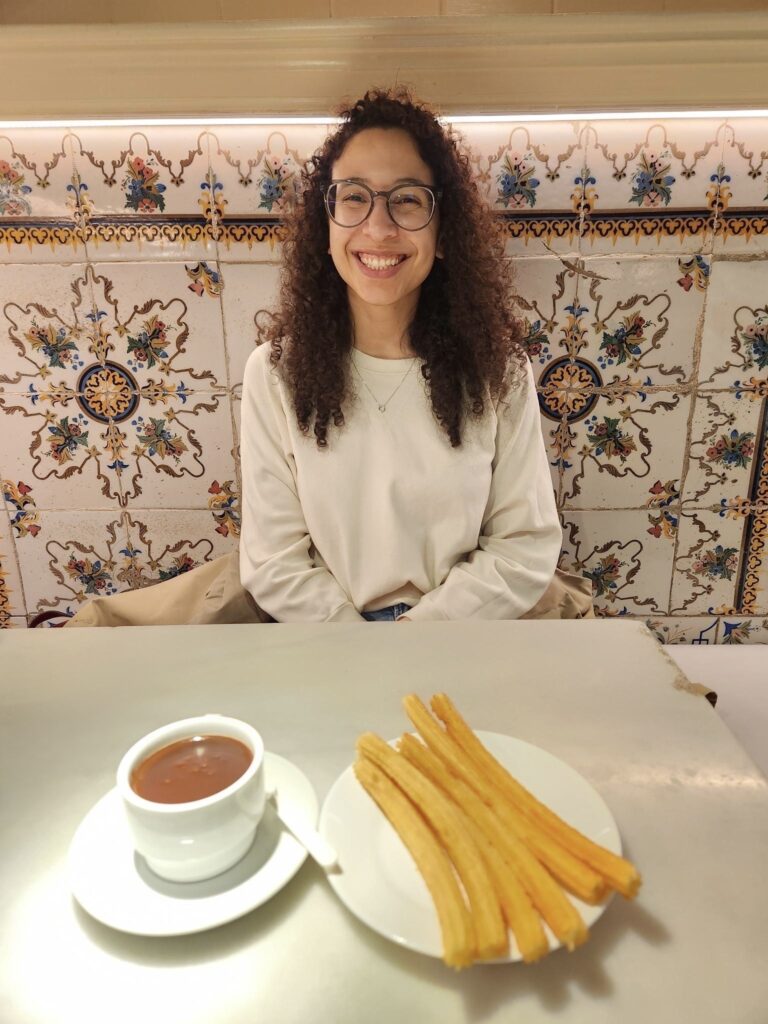
Is there a special story that goes with your "fun photo" and that you wouldn't mind sharing?
My husband and I went to Spain for two weeks on our honeymoon this year! I’m grateful for my knowledge of Spanish, as it expands the world I get to be a part of.
Pictured are some delicious churros with chocolate for dipping!
What’s something you’ve learned at 1nHealth that you think everyone should know—whether they work here or not?
As a project manager, I don’t get to sit in the exam room and see the detailed work sites do. What I do see is the pattern across studies, and the one I keep noticing is that enrollment goes better when it’s person-focused.
When a site feels genuinely supported, that tends to reach the patient too, and it shows up later in the numbers: screening volume, screen-fail rates, retention. When a site feels disconnected, I see that downstream as well. I used to think enrollment was mostly a volume game. Watching several studies at once, I’ve come to think it’s a relationship game that happens to produce numbers.