
The gap between Alzheimer's research and the people who need it most.

For our founder, this work is personal. For the field, the problem is structural.
For Dan, CEO and founder of 1nHealth, Alzheimer’s disease is not a therapeutic area on a strategy deck. He lost his grandmother to it. That loss is part of why he built this company, and part of why closing the distance between Alzheimer’s research and the communities it was designed to serve sits at the center of what 1nHealth does.
 
The disease he watched take his grandmother is now the leading edge of one of the most active research periods in neurology. New therapies. Earlier detection. Genuine momentum after decades of setbacks.


And yet the structural problem remains: the people most affected by Alzheimer’s are still the least likely to reach the research meant to treat them.

What the numbers say

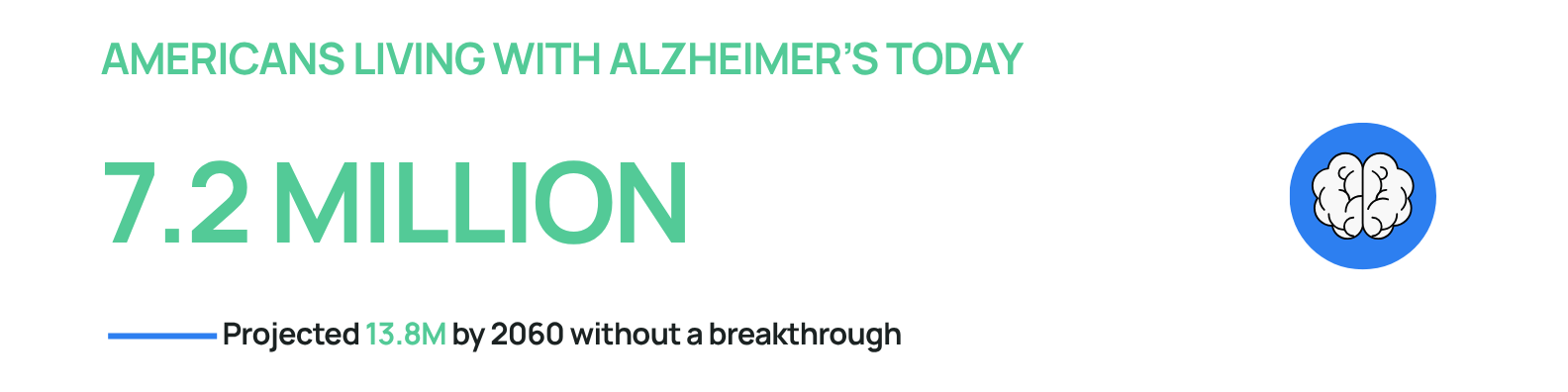
An estimated 7.2 million Americans age 65 and older are living with Alzheimer’s dementia today. Without a medical breakthrough, that number could reach 13.8 million by 2060. 
The disease kills more people than breast cancer and prostate cancer combined. One in three older adults dies with Alzheimer’s or another dementia. 
 
What is in question is whether clinical research is reaching the people who need it.

The referral gap

Less than 1% of eligible patients in the United States are ever referred into a clinical study.
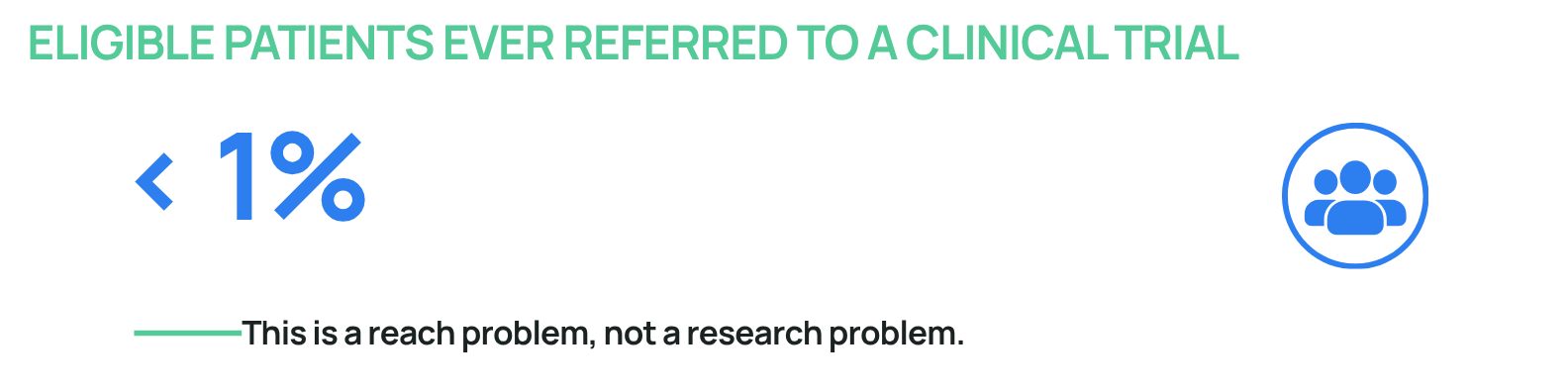
That figure belongs in every conversation about Alzheimer’s research timelines. It is not a clinical problem or a regulatory one. It is a reach problem. And reach is a recruitment function.
Burdensome visit schedules, extensive caregiver time commitments, and stringent eligibility criteria mean that only 10 to 27% of Alzheimer’s patients even qualify for most trials. The people who do qualify often never hear about them.

Who is and is not in the room

The enrollment gap is not evenly distributed, and a Yale School of Public Health study published in JAMA Network Open this April makes the picture concrete.
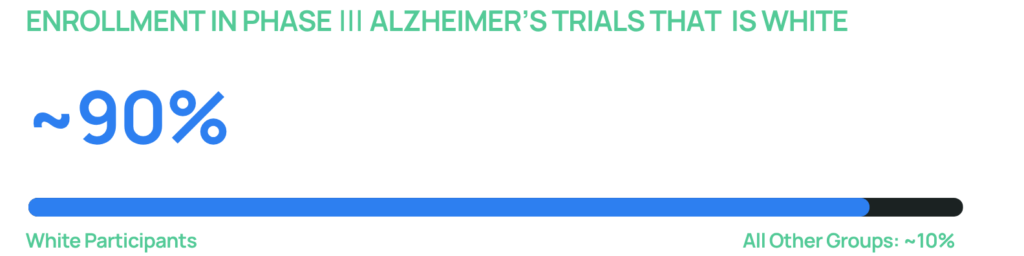
Researchers examined 88 U.S.-based Phase 3 Alzheimer’s drug trials conducted between 1997 and 2023. White participants made up more than 90% of enrollees in a typical trial. Black, Hispanic, Asian, and Native American populations were consistently underrepresented across the entire study period.
Nearly half of the trials examined did not report participants race or ethnicity at all. And only just over 4% of trials examined whether treatments worked differently across racial or ethnic groups. None reported detailed findings on differences in safety or effectiveness.
 
This matters clinically and morally. Older Black adults are nearly twice as likely to develop Alzheimer’s as their white counterparts. Hispanic adults also face a significantly higher risk. The populations carrying the heaviest burden of this disease are the least represented in the research meant to address it.
 
Nearly 4 in 5 Americans say they would want to know if they had Alzheimer’s before symptoms changed their lives. 
 
The intent to participate exists. The outreach and trial design to match it do not.

What recruitment actually controls

Recruitment cannot shorten a protocol or rewrite eligibility criteria. What it can control is who hears about a study, how it is explained, whether the ask feels accessible to someone who has historically had reason not to trust medical research, and whether the community around a potential participant sees the study as something worth doing.

A few questions worth asking of any Alzheimer’s recruitment effort:
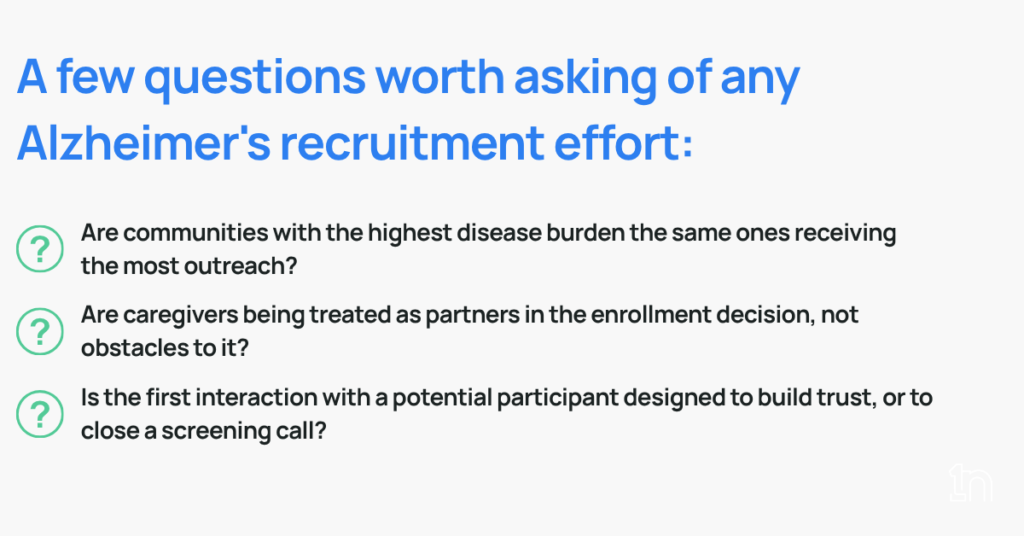
If those answers are unclear, enrollment gaps are being built in before a single site opens.

Awareness month is not enough. Access is.

Dan built 1nHealth because he understood from personal experience what it means when medicine moves too slowly for the people who need it. The work is not abstract. It never has been.


June surfaces the statistics. The work that follows it is operational.


At 1nHealth, we connect research sponsors with the communities their trials were designed to serve. That means meeting people where they are, communicating in ways that reflect their lives, and building the kind of trust that turns awareness into action.

Connect with us today